
Hackathon
Introduction
A hackathon on DojoCode is a project competition. Instead of solving a list of challenges against the clock, you get a brief, you build a project for it in the DojoCode editor, and a jury of real people scores what you shipped. The winners take home DojoCode Tokens.
Contests test how fast you solve; hackathons test what you can build. Both live under Compete in the top menu.
The four phases
Every hackathon walks through the same four phases, and the page tells you which one is on:
- Registration (Upcoming) — the invitation is public, the brief is sealed. Register now so you are ready the moment it starts.
- Build & submit (Live) — the brief is revealed to everyone, registration closes, and you build. Submit before the deadline; you can resubmit as often as you want until then.
- Judging — submissions are closed. Every judge opens every project, runs it and scores it on the criteria.
- Results (Finished) — the ranking is published, the prizes are paid out, and every submission opens to the community.
The phase timeline sits right under the hackathon title, with the date each phase turns over.
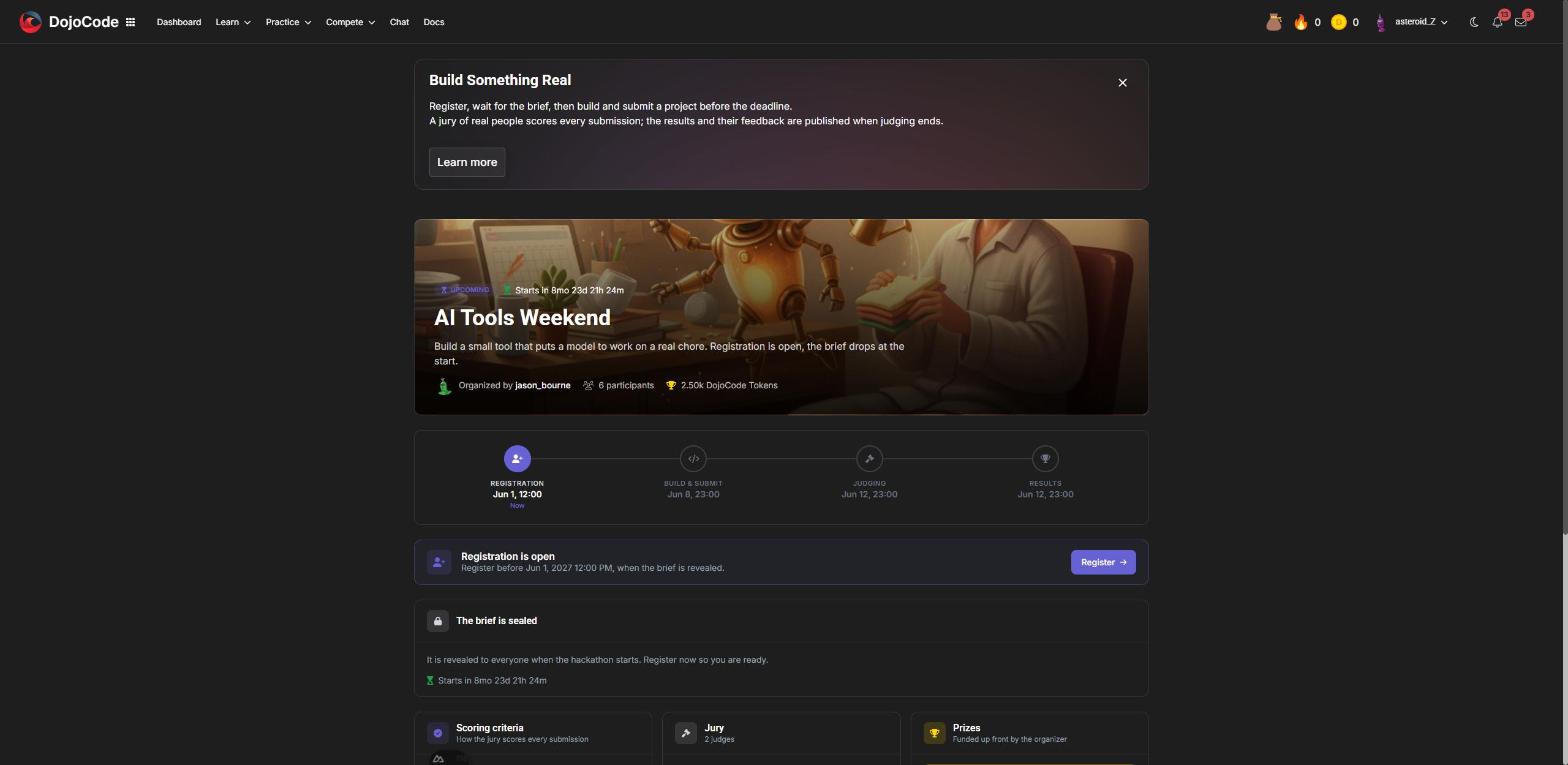
Fig. 1 — A hackathon page in its registration phase
Finding hackathons
Open Compete → Explore hackathons. The list shows what is live and what is upcoming by default; toggle the Judging and Finished chips to see the rest. The spotlight card at the top is the hackathon running right now, or the next one to start.
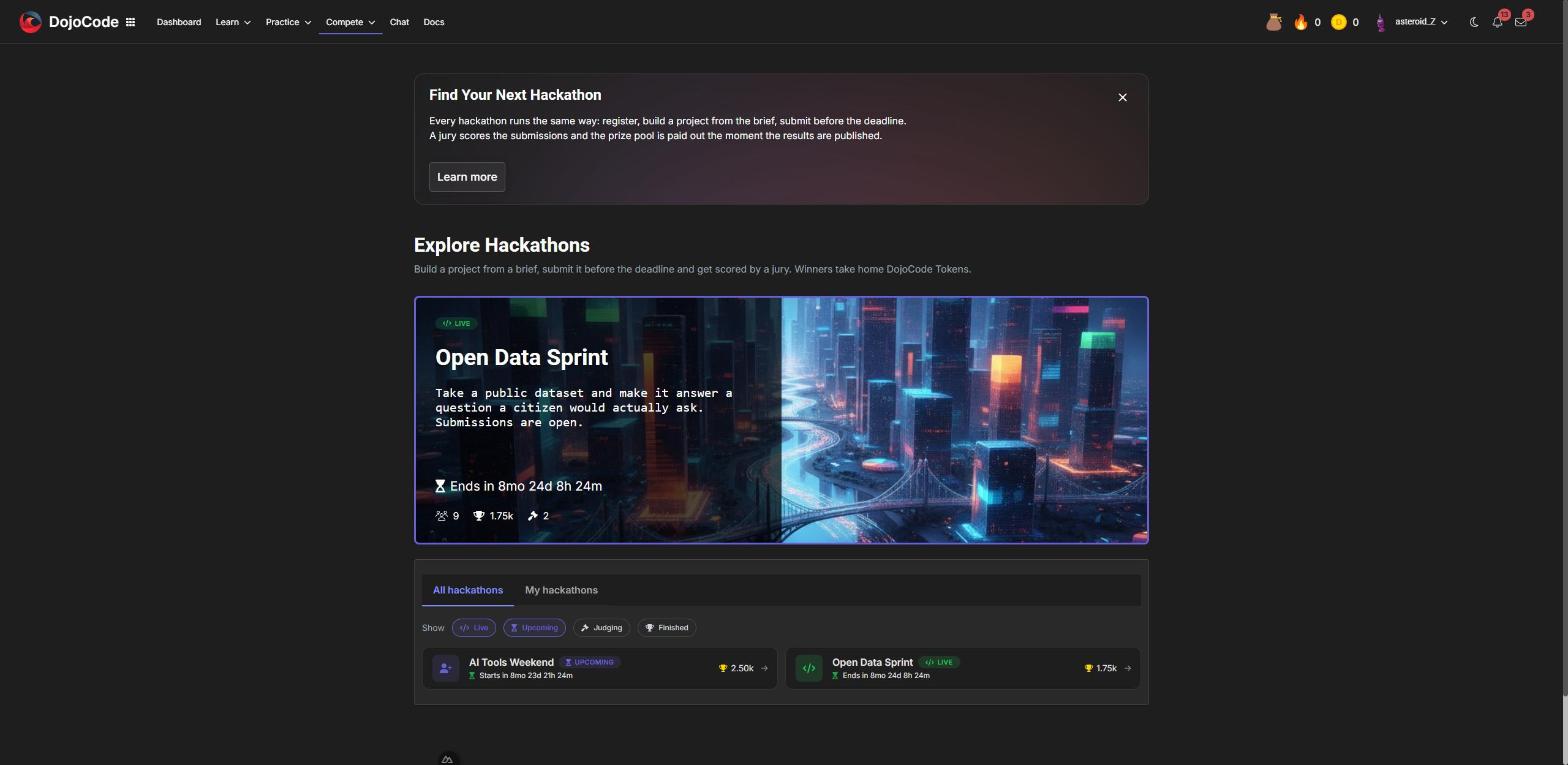
Fig. 2 — Explore hackathons, with the phase filter
Registering
Click Register on the hackathon page while it is upcoming. You need a verified email address. You can unregister any time before the start; after the start the roster is locked. The organizer and the judges cannot register — they run the show.
The brief
The brief is the task: what to build, the rules, what the jury looks for. It stays sealed until the start date, so nobody gets a head start. Registered participants get a notification and an email the moment it drops.
Submitting a project
Once the hackathon is live, Submit project opens a small form:
- Pick one of your DojoCode projects. DojoCode copies its files at that moment — a snapshot. Keep editing the project afterwards; the jury sees the snapshot, not your later work. Resubmit to replace it.
- Describe it — a title and a description the jury reads before opening the code. You can add a walkthrough video link.
- Submit. You get a confirmation toast and a notification.
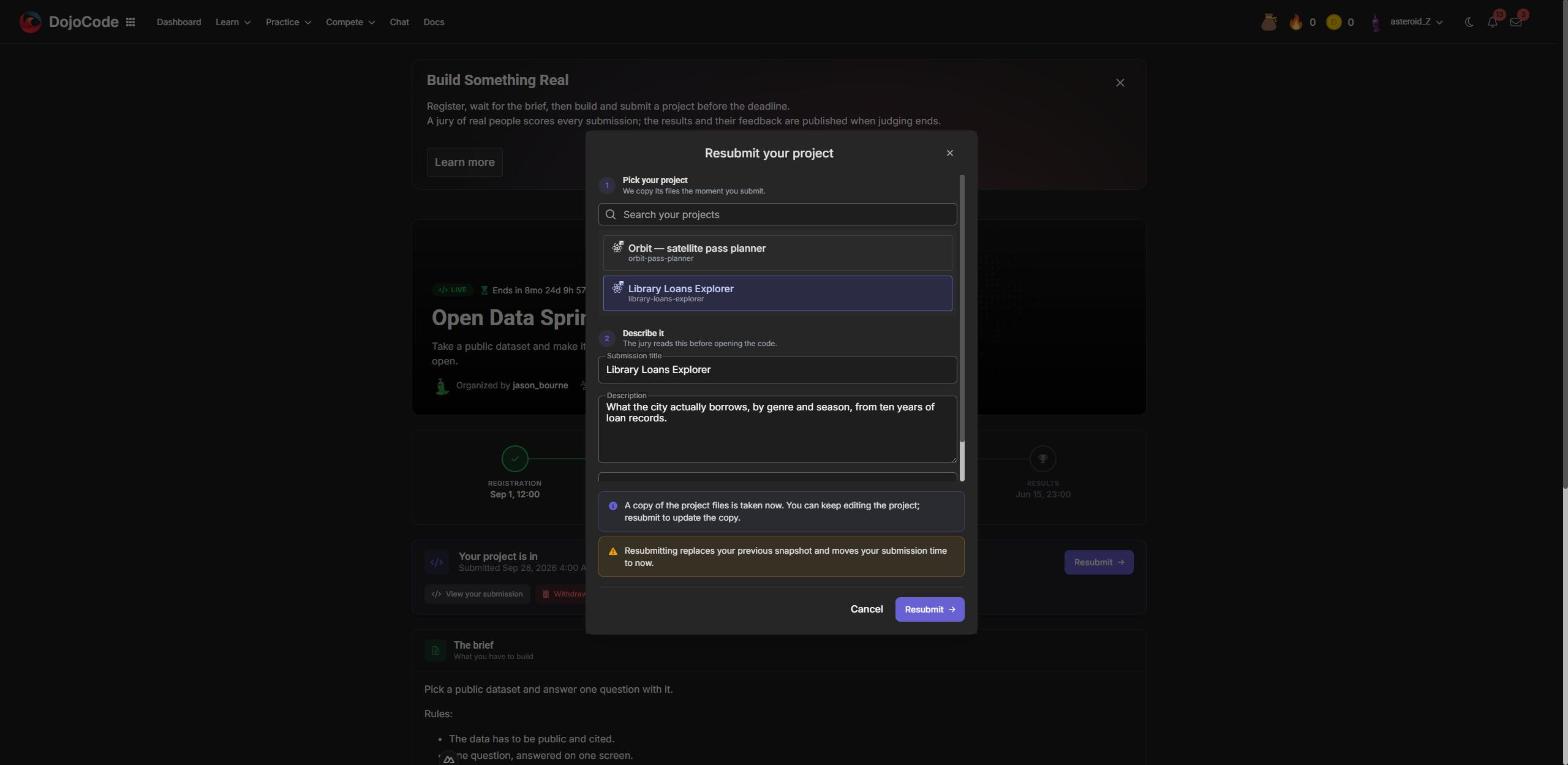
Fig. 3 — The submit form
A few things worth knowing:
- One submission per participant. Resubmitting replaces the previous snapshot and moves your submission time to now — ties in the ranking go to the earlier submission.
- Withdraw removes your submission entirely. Both resubmit and withdraw close at the deadline.
- Secrets. If your project reads secrets, their names travel with the snapshot but their values never do. A judge who wants to run it types their own values in the Secrets tab of the preview.
- Published site. If you published the project to its
*.dojocode.netaddress, the submission links to it. The link is frozen at submit time; if the last deploy is older than the code you submitted, it is flagged so the jury knows the live site is an older build. - Anonymous judging. Judges see submissions without names until the results are out. Keep your name out of the description and the video if you want that to hold.
Judging
During the judging window every judge scores every submission on the criteria the organizer defined (for example Innovation, Execution, Design, Presentation — each with its own maximum). They read your description, browse the code, run the preview and leave a comment. Scores are private until the results.
A submission's score is the average of the judges who scored it. A project nobody scored ranks after every scored one.
Results
When judging ends, the ranking is computed and the prizes are paid automatically:
- the podium and the full ranking, with each submission's average score and how many judges scored it;
- every judge's scores and comment on your submission page;
- DojoCode Tokens credited to the winners according to the prize table;
- XP for everyone a judge scored: 200 XP for the submitted project, plus a podium bonus of +500 XP (1st), +300 XP (2nd) or +200 XP (3rd) when at least 3 submissions were judged. The XP counts toward your level and the general leaderboard; the contest rating is not affected. The organizer and the jury earn no XP.
From then on every submission is open to the community — anyone can open it, run the snapshot, like it and leave comments.
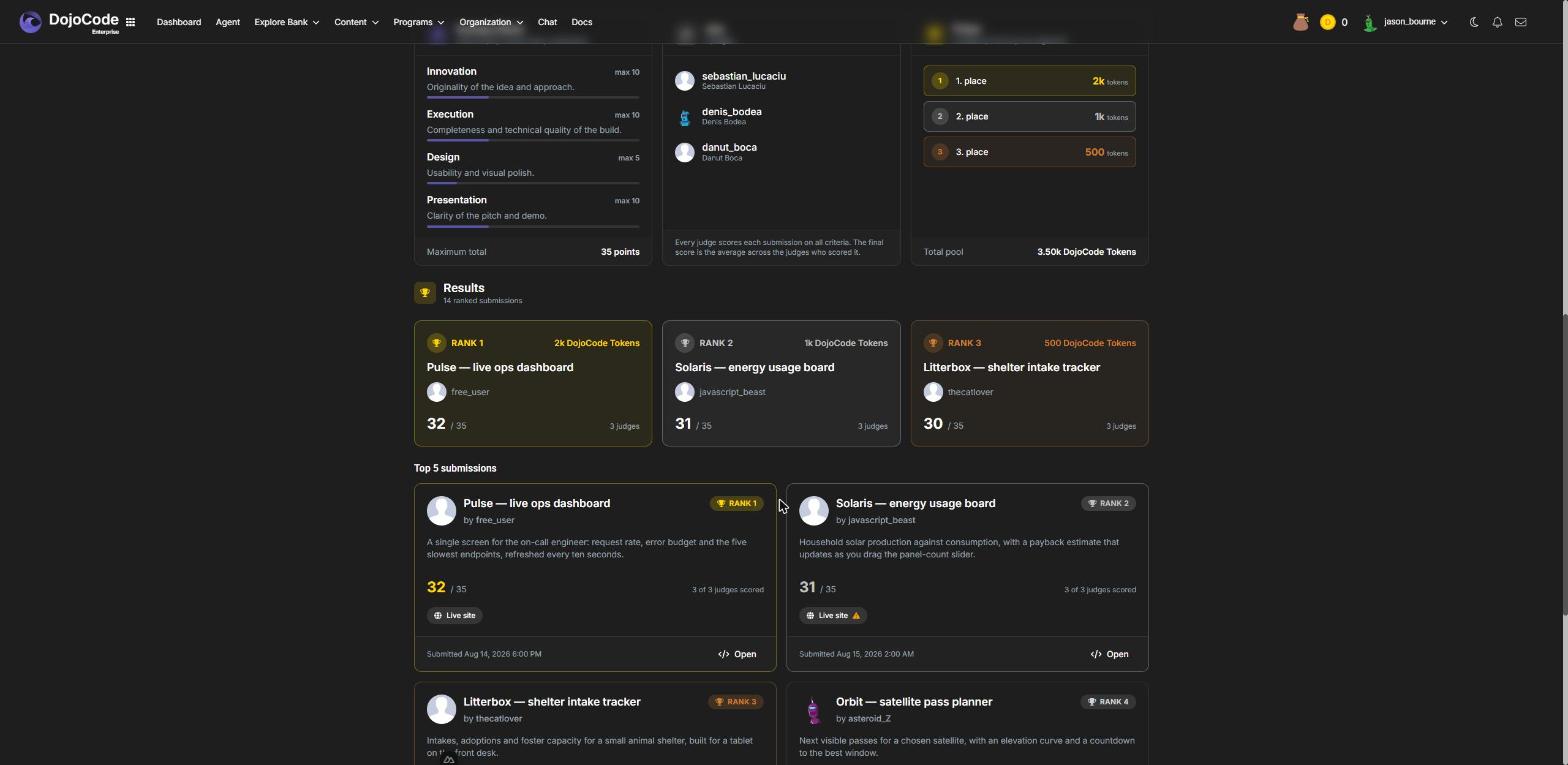
Fig. 4 — Results: the podium and the ranked gallery
Tips
- Read the criteria before you write a line — they are the rubric.
- Ship early, then resubmit. A submitted project beats a perfect plan.
- Make the preview work without your secrets, or say in the description what a judge needs to type.
- The jury runs your snapshot in the preview, so make it work from the snapshot alone. Your published site is shown to the community once the results are out.